Sound Stage
Sound Stage
燈光聲音裝置,依場地而定。
臺南,台灣,2023。
Light & Sound Installation. Dimensions variable.
Tainan, Taiwan, 2023.
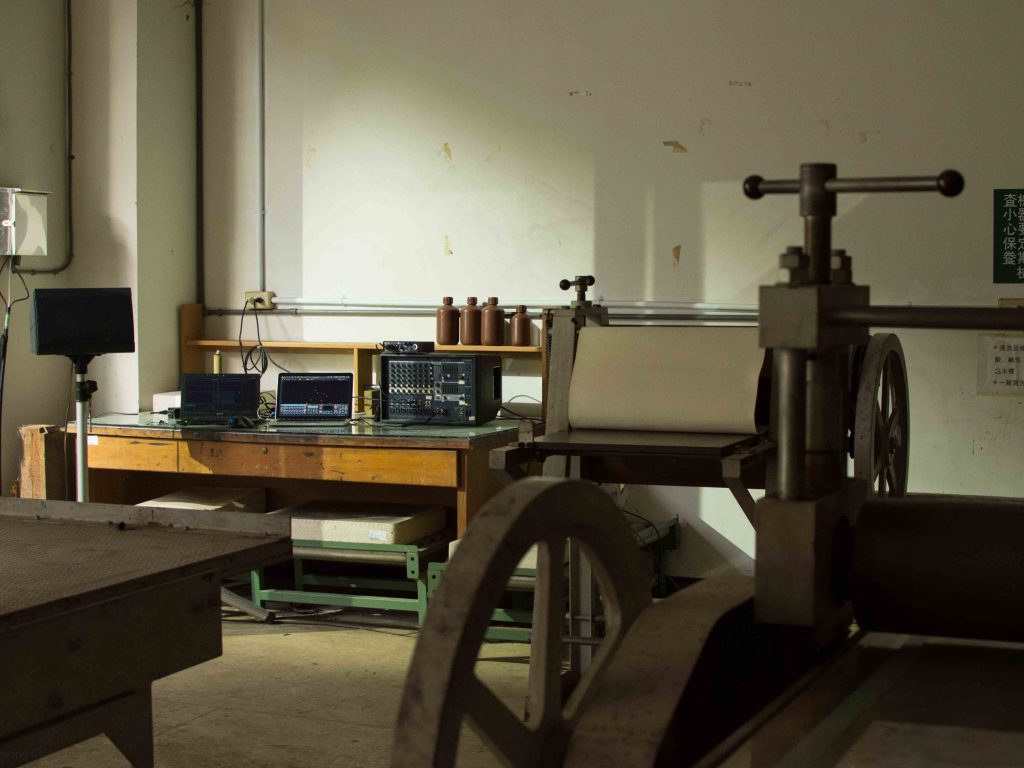
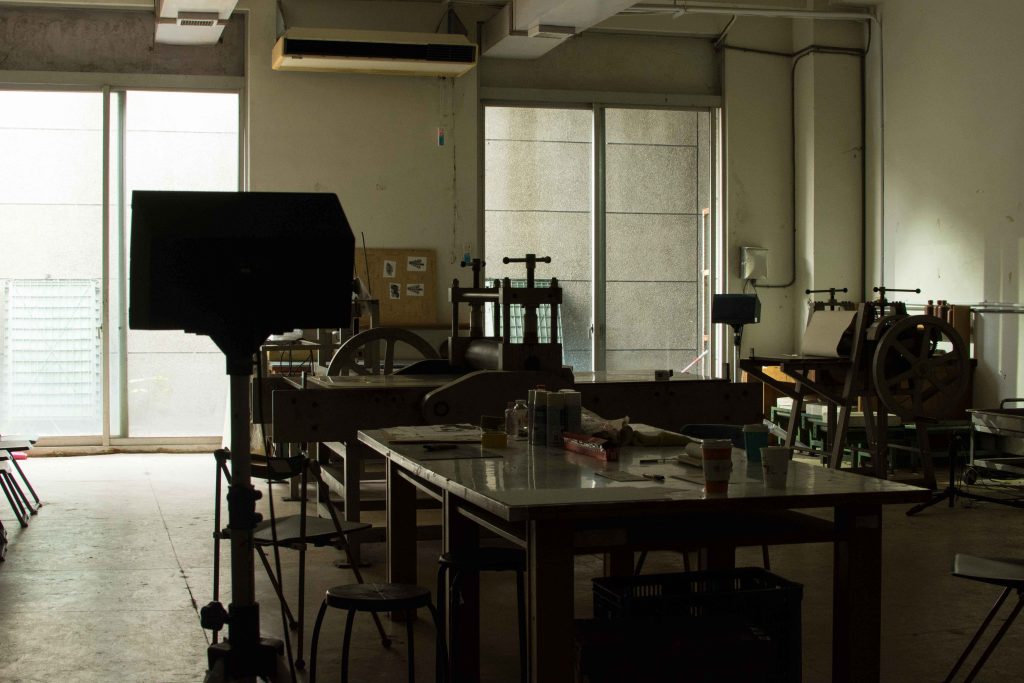
作品的原型發生在南藝大閒置的版畫教室裡,經過這邊總會看到,沈甸甸且鏽跡斑斑的版畫印壓機、在滾筒運輸機上彷彿考古學家挖掘出的石板⽯、瓶罐的顏料和化學品、曬乾架上某張⼗幾年前的版畫作品⋯⋯。 假想著曾經有⼈在這裡埋頭於版畫創作,更甚是聯想到印刷術的發明、出版報紙和書籍的興起——關於視覺影像不斷生產的過程。
然⽽當版畫教室空無一人,機器影像停止生產影像,機具、物件、空間停駐於當下,漸漸使人注意到⽣產影像以外的聲⾳:窗外汽機⾞的輪胎磨擦柏油路的聲⾳、器械的⽩噪⾳、鋼筋建築熱脹冷縮的顆粒⾳、地下室水管的水流聲、空間外頭人來人往的聲音⋯⋯。版畫機具變成反射聲⾳的物件——閒置使得這個空間的功能改變了,⽽原先製造影像的空間變成了容納聲⾳的場域。也因此產⽣在這個空間處理聲響的想法。
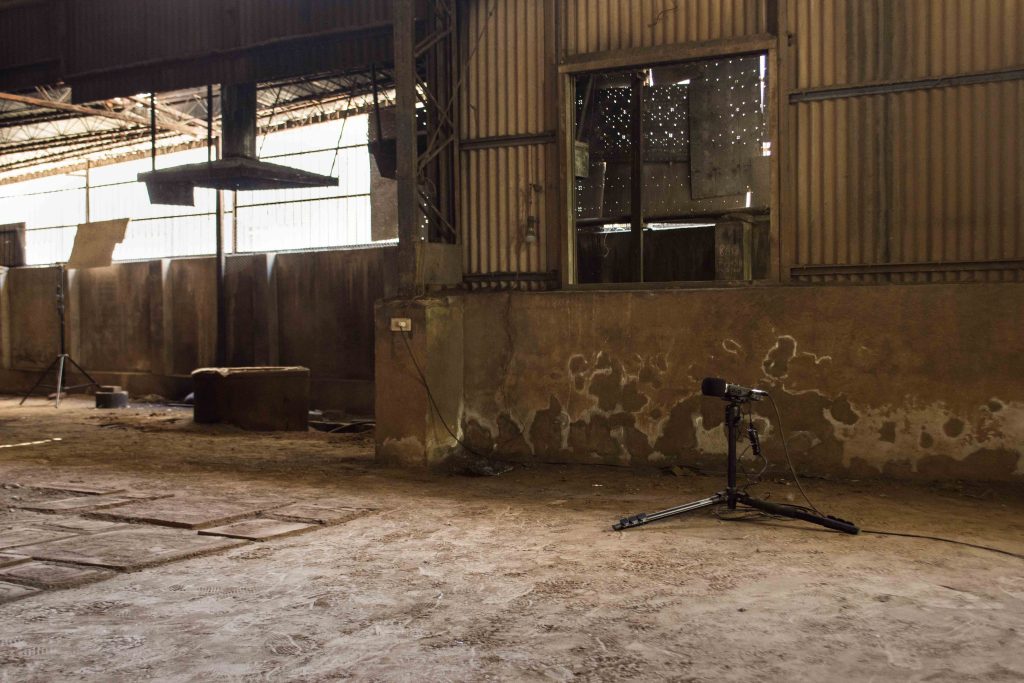
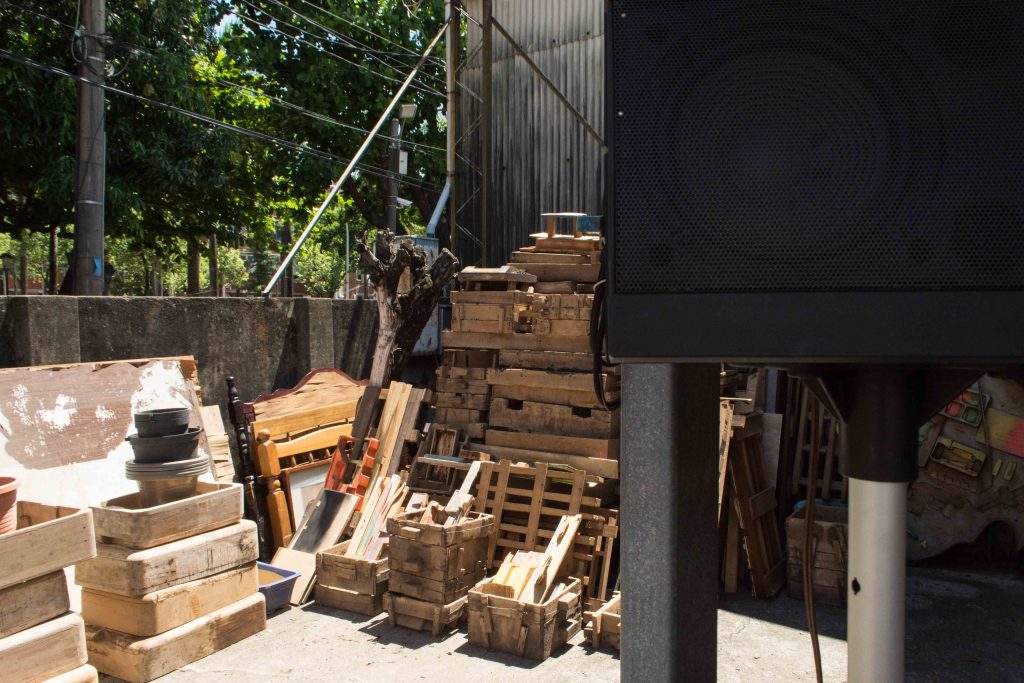
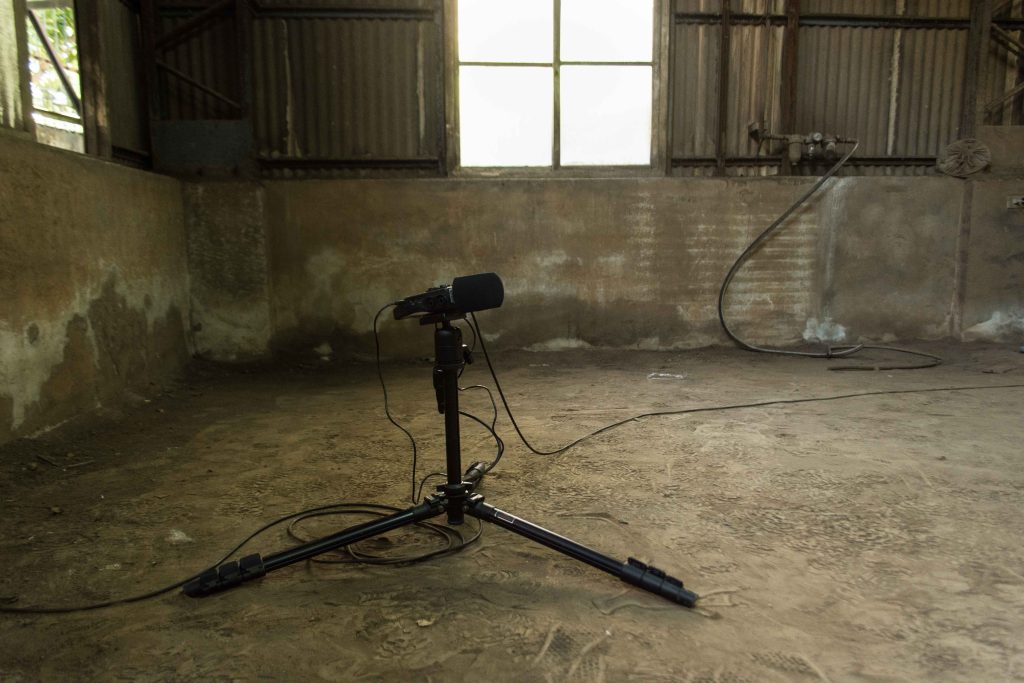
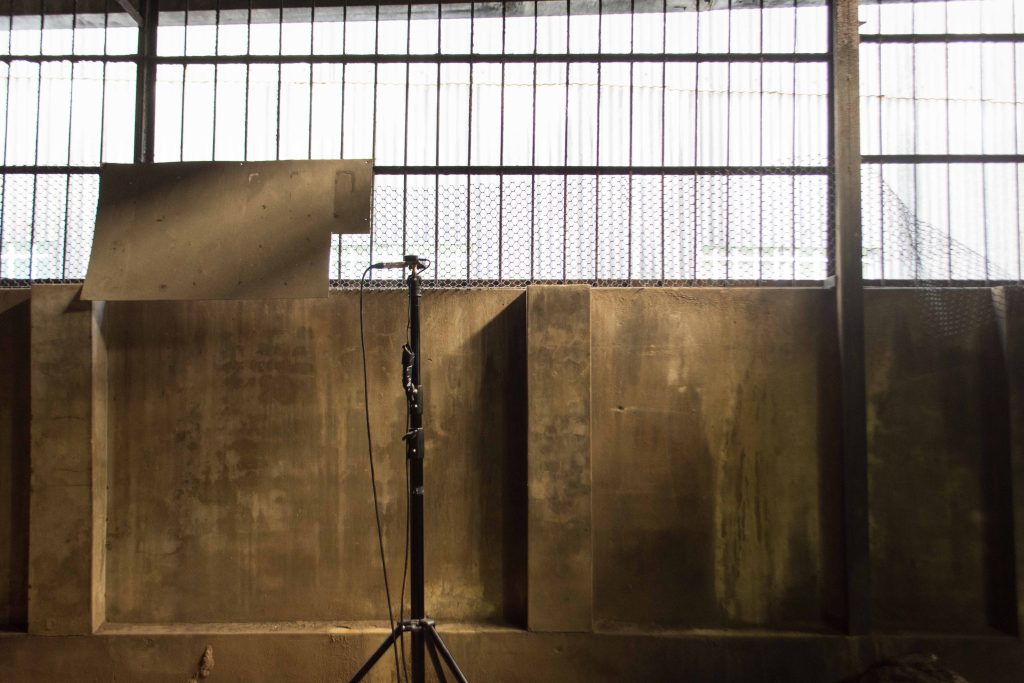
在聲⾳的處理上,先是收集環境⾳,進入效果器再製播出。在調整⾳場與空間互相磨合後,聲⾳在麥克風、⾳響及空間物件之間穿梭、反彈,形成環環相扣的即時環境聲響。
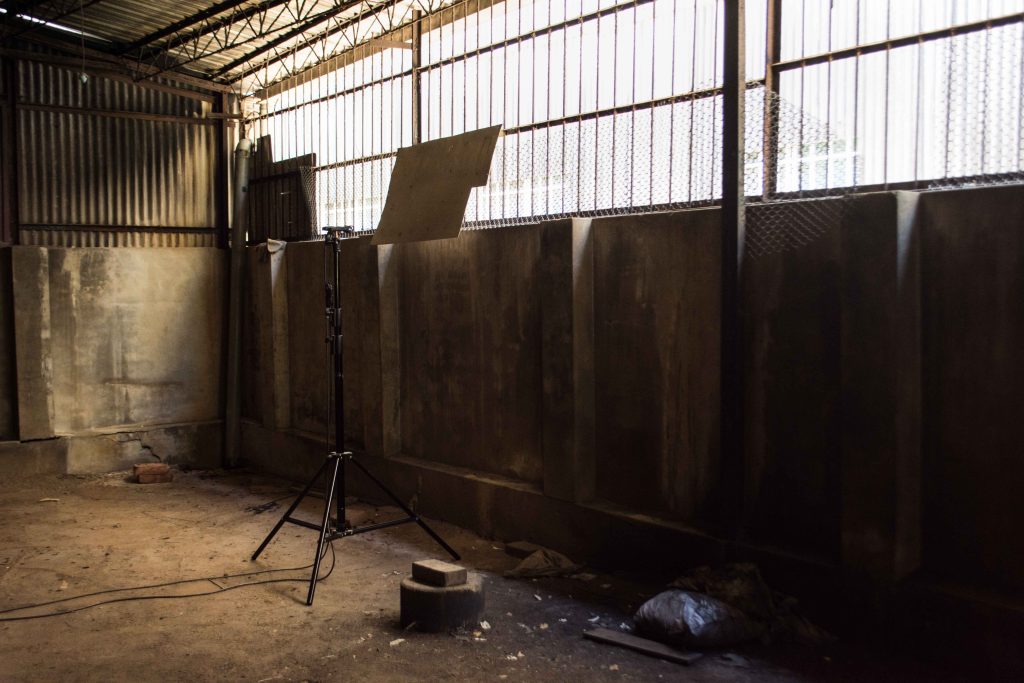
在聲響成為主導後,進⽽思考藉由聲音形塑影像的可能,因此模擬原本就會出現在這個空間的自然光,以聲⾳頻率的不同改變光線的形狀。 另外效果器處理之⼀的⾳量限制,在觀者進入此空間之後(發出或⼤或小的聲⾳)成為了第四件形塑聲響的元素,與⾳場產生進一步的連結。
然⽽當版畫教室空無一人,機器影像停止生產影像,機具、物件、空間停駐於當下,漸漸使人注意到⽣產影像以外的聲⾳:窗外汽機⾞的輪胎磨擦柏油路的聲⾳、器械的⽩噪⾳、鋼筋建築熱脹冷縮的顆粒⾳、地下室水管的水流聲、空間外頭人來人往的聲音⋯⋯。版畫機具變成反射聲⾳的物件——閒置使得這個空間的功能改變了,⽽原先製造影像的空間變成了容納聲⾳的場域。也因此產⽣在這個空間處理聲響的想法。
在聲⾳的處理上,先是收集環境⾳,進入效果器再製播出。在調整⾳場與空間互相磨合後,聲⾳在麥克風、⾳響及空間物件之間穿梭、反彈,形成環環相扣的即時環境聲響。
在聲響成為主導後,進⽽思考藉由聲音形塑影像的可能,因此模擬原本就會出現在這個空間的自然光,以聲⾳頻率的不同改變光線的形狀。 另外效果器處理之⼀的⾳量限制,在觀者進入此空間之後(發出或⼤或小的聲⾳)成為了第四件形塑聲響的元素,與⾳場產生進一步的連結。
The prototype of the work originated in an idle printmaking classroom at the TNNUA. Passing by this place, you would often see a heavy and rusted printmaking press, stone slabs on the conveyor belt resembling archaeological finds, jars of paint and chemicals, and a drying rack with print works from over a decade ago. Imagining someone once engrossed in printmaking here, one might even think of the invention of printing, the rise of newspapers and books—the ongoing process of visual image production.
However, when the printmaking classroom is empty, and the machinery halts image production, the tools, objects, and space become static, gradually drawing attention to sounds beyond image production: the friction of car tires on the asphalt outside the window, the white noise of machinery, the creaking of steel buildings expanding and contracting, the water flowing through basement pipes, and the sounds of people passing by outside the space. The printmaking equipment becomes an object that reflects sounds—its idleness changes the function of this space, transforming it from an image-producing area to one that accommodates sounds. This inspired the idea of processing sounds in this space.
In handling the sounds, environmental noises were first collected, processed through effectors, and then broadcast. After adjusting the sound field to harmonize with the space, the sounds traveled, reflected, and intertwined among the microphones, speakers, and objects within the space, creating an interconnected real-time environmental soundscape.
As sound became dominant, the possibility of shaping images through sound was considered. Thus, the natural light originally present in the space was simulated, with the light’s shape altered by varying sound frequencies. Additionally, the volume limitation processed by one of the effectors became the fourth element shaping the soundscape. When a viewer enters the space and produces sounds of varying loudness, this interacts further with the sound field, creating a deeper connection.
However, when the printmaking classroom is empty, and the machinery halts image production, the tools, objects, and space become static, gradually drawing attention to sounds beyond image production: the friction of car tires on the asphalt outside the window, the white noise of machinery, the creaking of steel buildings expanding and contracting, the water flowing through basement pipes, and the sounds of people passing by outside the space. The printmaking equipment becomes an object that reflects sounds—its idleness changes the function of this space, transforming it from an image-producing area to one that accommodates sounds. This inspired the idea of processing sounds in this space.
In handling the sounds, environmental noises were first collected, processed through effectors, and then broadcast. After adjusting the sound field to harmonize with the space, the sounds traveled, reflected, and intertwined among the microphones, speakers, and objects within the space, creating an interconnected real-time environmental soundscape.
As sound became dominant, the possibility of shaping images through sound was considered. Thus, the natural light originally present in the space was simulated, with the light’s shape altered by varying sound frequencies. Additionally, the volume limitation processed by one of the effectors became the fourth element shaping the soundscape. When a viewer enters the space and produces sounds of varying loudness, this interacts further with the sound field, creating a deeper connection.
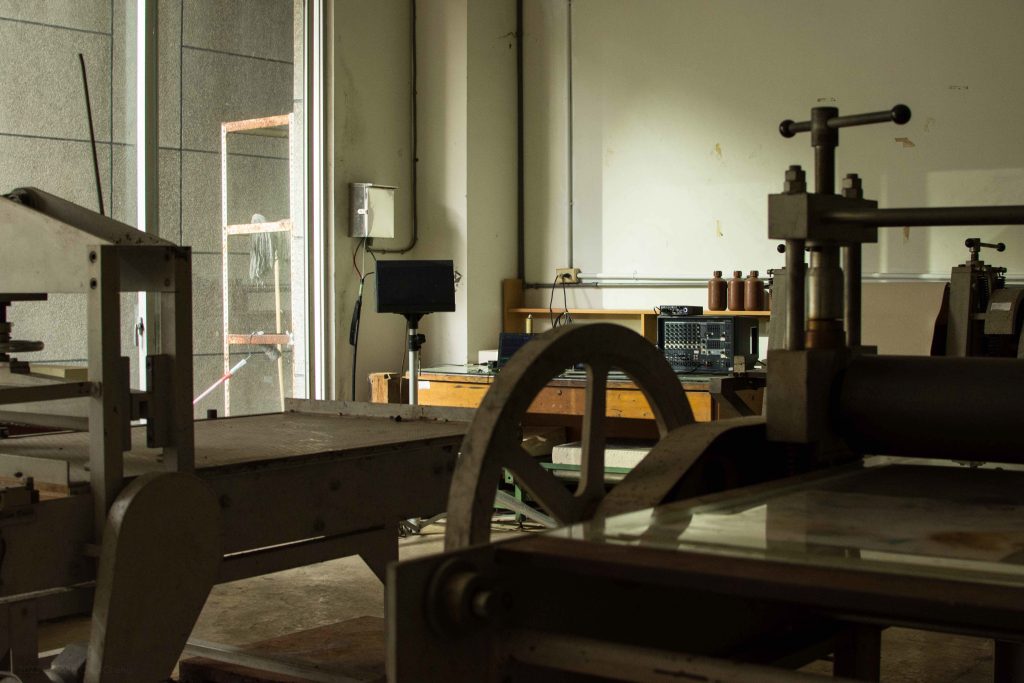
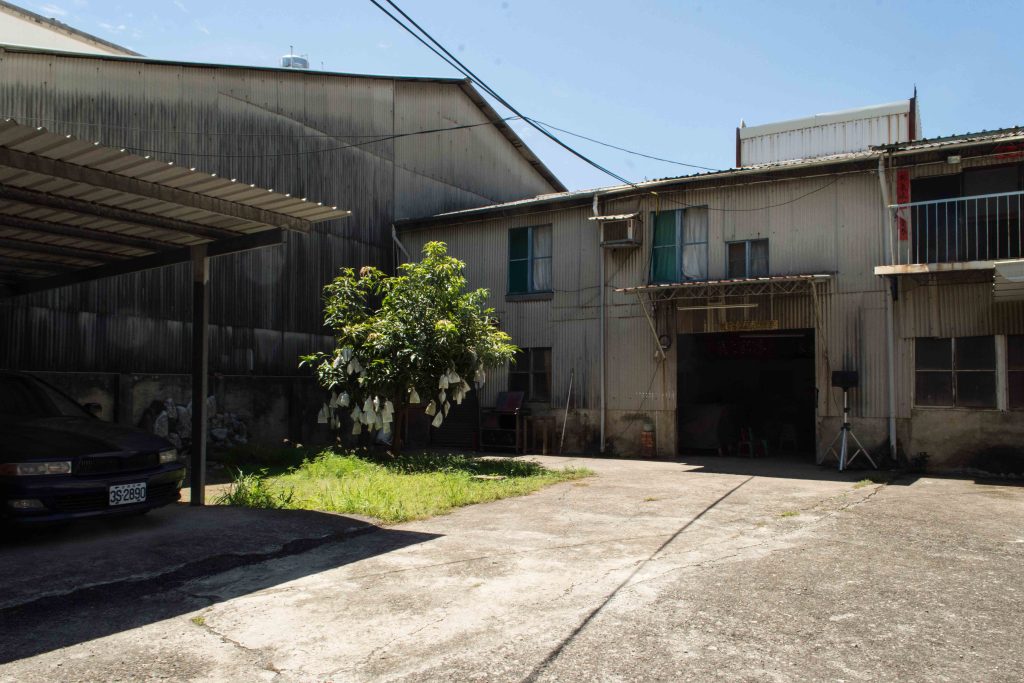
展覽《新增選項》|華慶鑄造廠
台南,台灣。2023。
Exhibition "New Option" | Shu-Kai Lin's Studio
Tainan, Taiwan. 2023.